Thailand on a budget, and where the money actually goes
A 1,200 baht day is genuinely liveable and the islands break it. Three daily budgets, why the coast costs double, and the four costs nobody warns you about.
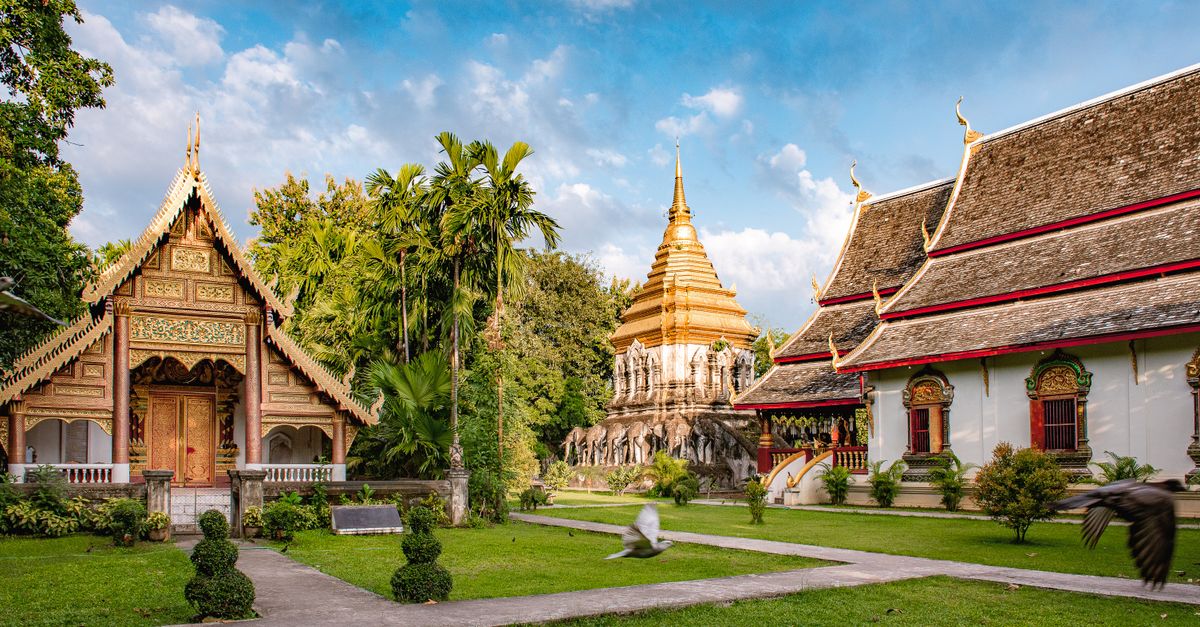
Photo · Balazs Simon · Pexels
Thailand is two budgets in one country. The mainland is genuinely cheap. The islands in high season are not, and averaging the two produces a number that is wrong for both halves of your trip.
Here is the arithmetic in baht, checked September 2026.
Thai baht. Convert any figure on this page into your own currency at today's published rate.
Open the currency converter →The day, three ways, on the mainland
| Tight | Comfortable | Relaxed | |
|---|---|---|---|
| Bed | 400, hostel or basic guesthouse | 1,200, good mid-range room | 3,000 |
| Breakfast | 50, street | 120, cafe | 300 |
| Lunch | 60, street plate | 150 | 400 |
| Dinner | 100, street or market | 350, restaurant | 900 |
| Local transport | 100 | 200 | 400 |
| Incidentals and entries | 150 | 400 | 900 |
| Day total | 860 | 2,420 | 5,900 |
On the islands in high season, roughly double the accommodation and add fifty per cent to the food. That is the single most useful sentence in this guide, and it is why a two-week Thailand budget needs to be built in two halves.
Where each region sits
Chiang Mai and the north: the best value in the country. Rooms, food and long-stay rentals are all below Bangkok, and the food is a genuinely distinct regional cuisine rather than a cheaper version of the same thing.
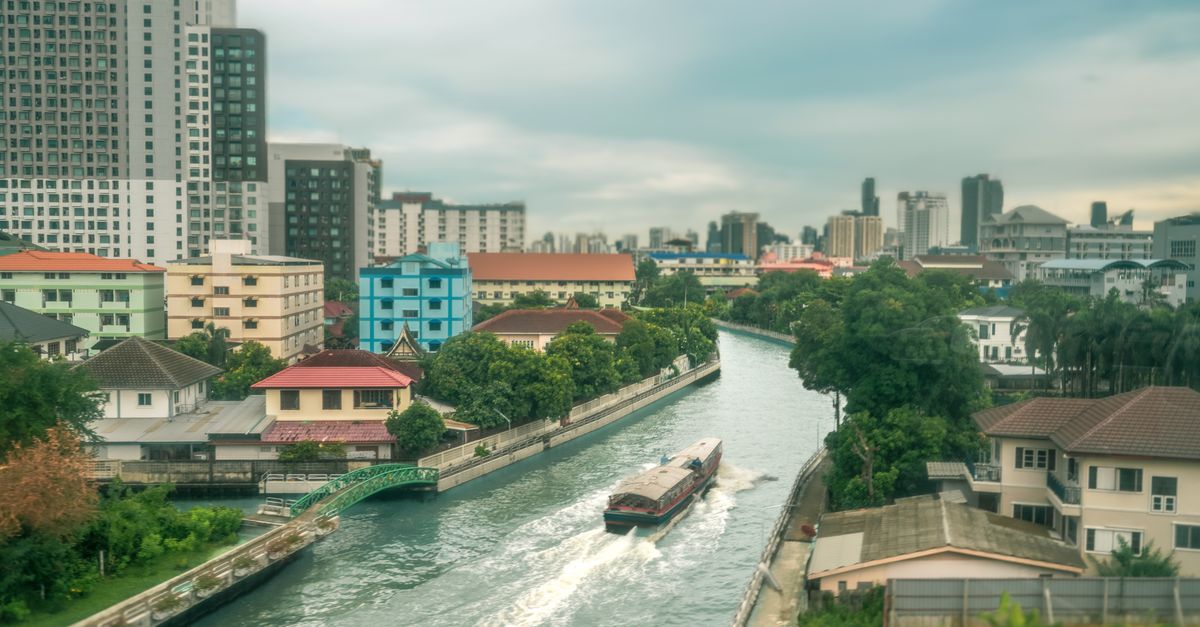
Bangkok: cheap to eat in, mid-priced to sleep in. Street food at 40 to 70 baht a plate is world-class and the accommodation market is a capital city's. Our Bangkok street food guide has the areas and the hours, and Bangkok or Chiang Mai has the wider comparison, including the burning season that decides the northern leg from February to April.
Isaan, the north-east: the cheapest region and almost nobody goes. Roughly half Bangkok prices, and the food is the best argument for it.
The islands: the expensive end, and the gap widens every year. Our islands ranking picks between them and covers which coast is in season.
The four costs nobody warns you about
1. National park fees. Charged per park, and the foreign-visitor rate is several times the Thai one. The parks department publishes the current rates. On an island trip that visits several marine parks this adds up quickly and it is always cash at the gate.
2. Island transfers. The ferry or speedboat to and from an island is a real line, and the combined bus-and-boat tickets sold at guesthouses are usually the cheapest way to buy it.
3. ATM fees. A fixed foreign-card charge per withdrawal, regardless of amount. Take out larger amounts less often, which is the opposite of the habit most people have.
4. Scooter damage claims. The largest of the four by a distance, and the one that turns a cheap trip into an expensive one. Most travel policies exclude motorbike accidents unless you hold a licence valid for that engine size at home, and many exclude them regardless. Photograph and video the bike before you leave the shop, and never leave a passport as a deposit.
Getting around cheaply
Overnight trains and buses on the long legs. The Bangkok to Chiang Mai sleeper is comfortable, safe and saves a night's accommodation at the same time, which is the only genuine two-for-one in Thai travel.
Domestic flights are cheap, cheap enough that the sleeper train is now a preference rather than a saving on that particular route. On Bangkok to the south the flight usually wins outright once you count the time.
In Bangkok, the BTS and MRT are cheap and fast, and the Chao Phraya express boat is the cheapest sightseeing in the country.
In Chiang Mai, songthaews are a shared fare and a scooter is what most long-stayers use, with the caveat above.
Eating, which is where Thailand is genuinely cheap
40 to 70 baht for a street plate, and this is where the best food is rather than a compromise. 150 to 400 baht a head at a good sit-down restaurant.
Two rules. Eat where the queue is, and eat at the right hours: roughly 7am to 11am and 6pm to midnight, because much of Thailand's street food stops between two and five in the afternoon. Our street food guide has the detail and Thailand for first-timers has the arrival practical layer including the free arrival card that third parties will try to charge you for.
When to go for the budget
The wet season, May to October, is the cheap one and it is not the washout the name suggests: the rain is heavy, warm and usually short. Room rates on the islands fall substantially.
November to February is the high season and the price reflects it.
The value window is the shoulder: late October into early November on the Andaman side, and May on the Gulf side. The Thai calendar has the two-coast pattern, which matters more than the price does.
Avoid Songkran, 13 to 15 April 2027, unless the festival is the point. Transport fills and rates rise.
What not to cut
Do not cut the travel insurance, particularly the scooter clause.
Do not cut to the cheapest island boat operator in rough weather.
Do not cut the location in Bangkok to save a few hundred baht. Twenty minutes of extra traffic twice a day for six days is a day of your trip.
Do cut the number of islands. Each one is a transfer and a set of fees, and two islands in a fortnight is better and cheaper than four. The two-week route is built that way.
Checked 21 Aug 2026.
Everything we check for Thailand →Visa-free · 60 days, on all five passports we check.
Short tourist stays only. Checked 21 Aug 2026; rules change without notice and the government page is the source of truth.
Check your own passport →Before you book
Thailand for first-timers has the arrival paperwork and the coast rule, and the two-week route is the shape.
Bangkok or Chiang Mai decides the mainland split and Vietnam or Thailand covers the cheaper alternative if the budget is the constraint.
The budget hub collects the rest and the Thailand country page has the tools.
Prices and fee structures checked September 2026 against the Tourism Authority of Thailand and Thailand's national parks department. Park fees and ferry prices are set locally and change, and everyday prices move with the exchange rate, so treat the figures above as ranges. Here is how we research and re-check guides.