 Uncommon · +150 XP
Best time to visit: Apr–May · Sep–Oct
Daily spend ~$85
Uncommon · +150 XP
Best time to visit: Apr–May · Sep–Oct
Daily spend ~$85
Portugal
A country the size of Tasmania with three coastlines of personality. Tiled hills in Lisbon, port cellars in Porto, and empty beaches most of the way between.
Portugal in ten slides
Wikipedia · 4 Sep 2026


Best time to visit Portugal: Apr–May · Sep–Oct
Crowds gone, water still warm.
Where people go in Portugal
What people go to see in Portugal


The Cathedral of Braga is a Roman Catholic church in the northern city of Braga, Portugal. Due to its long history and artistic significance, it is also one of the most important buildings in the country. It is the seat of the Archdiocese of Braga and of the Primate Archbishop of Portugal and Spain.
Wikipedia · CC BY-SA 4.0 · 30 Jul 2026
Krzysztof Golik · CC BY-SA 4.0

The Citânia de Briteiros is an archaeological site of the Castro culture located in the Portuguese civil parish of Briteiros São Salvador e Briteiros Santa Leocádia in the municipality of Guimarães; important for its size, "urban" form and developed architecture, it is one of the more excavated sites in northwestern Iberian Peninsula.
Wikipedia · CC BY-SA 4.0 · 22 Mar 2026
TarichaRivularis · CC BY-SA 3.0

The Garden of Santa Barbara is a municipal garden in the civil parish of Sé, municipality of Braga, alongside the eastern wing of the historical Archbishop's Palace of Braga.
Wikipedia · CC BY-SA 4.0 · 5 Jul 2026
José Goncalves · CC BY 3.0

The Sanctuary of Our Lady of Sameiro or Sanctuary of Sameiro is a sanctuary and Marian shrine in Braga, Portugal.
Wikipedia · CC BY-SA 4.0 · 7 Jul 2026
Otto Domes · CC BY-SA 4.0

The Alfama is the oldest neighborhood of Lisbon, spreading on the slope between the São Jorge Castle and the Tagus river. The district includes the freguesias (parishes) of São Miguel, Santo Estêvão, São Vicente de Fora and part of the two streets, "Freguesia da Sé: Rua do Barão" and "Rua São João da Praça". It contains many important historical attractions, as well as an abundance of Fado bars and restaurants.
Wikipedia · CC BY-SA 4.0 · 13 Feb 2026
Arne Müseler · CC BY-SA 3.0 de

Belém Tower, officially the Tower of Saint Vincent, is a 16th-century fortification located in Lisbon, Portugal, which served as a point of embarkation and disembarkation for Portuguese explorers and as a ceremonial gateway to Lisbon. The tower symbolizes Portugal's maritime and colonial power in early modern Europe.
Wikipedia · CC BY-SA 4.0 · 29 Jul 2026
Lisbon Photoshoots · CC BY-SA 4.0

The Jerónimos Monastery or Hieronymites Monastery is a former monastery of the Order of Saint Jerome near the Tagus river in the parish of Belém, in the Lisbon Municipality, Portugal. It became the necropolis of the Portuguese royal dynasty of Aviz in the 16th century but was secularized on 28 December 1833 by state decree and its ownership transferred to the charitable institution, Real Casa Pia de Lisboa.
Wikipedia · CC BY-SA 4.0 · 20 Aug 2026
Heartshade · CC BY 4.0

São Jorge Castle, sometimes known in English as Saint George's Castle, is a historic castle in the Portuguese capital of Lisbon, located in the freguesia of Santa Maria Maior. Human occupation of the castle hill dates to at least the 8th century BC while the oldest fortifications on the site date from the 2nd century BC.
Wikipedia · CC BY-SA 4.0 · 2 Sep 2026
fulviusbsas · CC BY-SA 3.0

Time Out Market Lisboa is a food hall located in the Mercado da Ribeira at Cais do Sodré in Lisbon, Portugal.
Wikipedia · CC BY-SA 4.0 · 18 Jul 2026
Paul Arps from The Netherlands · CC BY 2.0

The Clérigos Church is a Baroque church in the city of Porto, in Portugal. Its 75-meter-tall bell tower, the Torre dos Clérigos, can be seen from various points of the city and is one of its most characteristic symbols.
Wikipedia · CC BY-SA 4.0 · 1 Aug 2026
Diego Delso · CC BY-SA 3.0

The Luiz I Bridge, commonly known as Dom Luís I Bridge, is a double-deck metal arch bridge that spans the river Douro between the cities of Porto and Vila Nova de Gaia in Portugal. At its construction, its 172 metres (564 ft) span was the longest of its type in the world.
Wikipedia · CC BY-SA 4.0 · 31 Aug 2026
Deensel · CC BY 2.0

The Livraria Lello & Irmão, commonly known in English as the Lello Bookshop, is a bookshop located in the civil parish of Cedofeita, Santo Ildefonso, Sé, Miragaia, São Nicolau e Vitória, in the northern Portuguese municipality of Porto.
Wikipedia · CC BY-SA 4.0 · 24 Jul 2026
Guinness323 · CC0

The Ribeira Square is a historical square in Porto, Portugal. It is included in the historical centre of the city, designated World Heritage by UNESCO.
Wikipedia · CC BY-SA 4.0 · 20 May 2025
Alvesgaspar · CC BY-SA 4.0
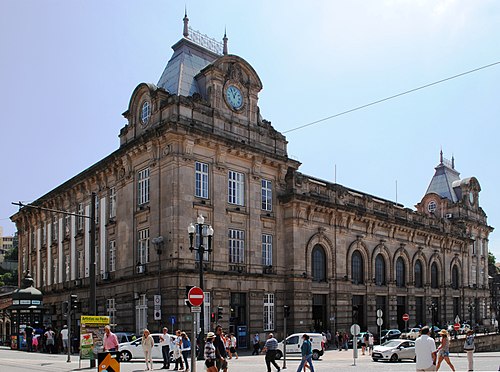
São Bento railway station is a 20th-century railway terminal in the civil parish of Cedofeita, Santo Ildefonso, Sé, Miragaia, São Nicolau e Vitória, in the municipality of Porto, district of Porto. The English translation of São Bento is Saint Benedict. The station is located in the Historic Centre of Porto, which has been declared a UNESCO World Heritage Site and as a National Monument of Portugal.
Wikipedia · CC BY-SA 4.0 · 25 Aug 2026
HombreDHojalata · CC BY-SA 4.0

Serralves is a cultural institution located in Porto, Portugal. It includes a contemporary art museum, a park, and a villa, with each one of these being an example of contemporary architecture, Modernism, and Art Deco architecture. The museum, designed by Álvaro Siza Vieira, is now the second most visited museum in Portugal.
Wikipedia · CC BY-SA 4.0 · 11 Jul 2026
Geerd-Olaf Freyer from Aachen, Deutschland · CC BY-SA 2.0

Cabo Girão is a lofty sea cliff located along the southern coast of the island of Madeira, in the Portuguese archipelago of Madeira, geographically part of Africa. Cabo Girão is a tourist lookout point, with up to 1800 visitors a day. The location is also a common starting point for hikers.
Wikipedia · CC BY-SA 4.0 · 10 Aug 2026
Bjørn Christian Tørrissen · CC BY-SA 3.0

The Cathedral of Our Lady of the Assumption is a Catholic cathedral in Sé, Funchal, Madeira, Portugal, serving as the mother church of the Diocese of Funchal, which encompasses all of the Autonomous Region of Madeira. Completed in 1514, it is one of the few structures that survives virtually intact since the early period of colonization of Madeira. The patron of the cathedral is Our Lady of the Assumption.
Wikipedia · CC BY-SA 4.0 · 10 Aug 2026
Diego Delso · CC BY-SA 4.0
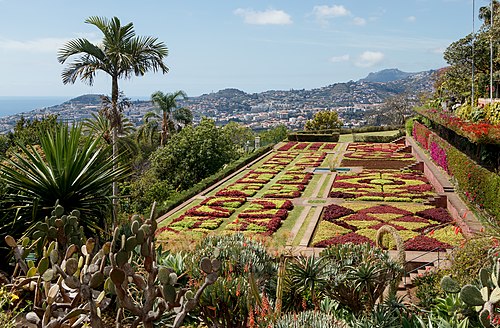
Madeira Botanical Garden is a botanical garden in Funchal, Madeira, opened to the public in 1960. The area was previously part of an estate belonging to the family of William Reid, founder of Reid's Hotel.
Wikipedia · CC BY-SA 4.0 · 21 May 2026
H. Zell · CC BY-SA 3.0

The Mercado dos Lavradores is a fruit, vegetable, flower and fish market in Funchal, Madeira. The building was designed by Edmundo Tavares and opened on 24 November 1940. The facade, main entrance and fish market contain traditional Azulejo depicting regional themes, executed by João Rodrigues.
Wikipedia · CC BY-SA 4.0 · 22 Mar 2026
Luke H. Gordon · CC BY 2.0

Pico do Areeiro, at 1,818 m (5,965 ft) high is a mountain located on the Portuguese island and autonomous region of Madeira, the third highest on the island. Situated within the mountainous interior of the island roughly halfway between the northern and southern coasts. It is a popular year round tourist attraction with the summit accessible by road directly from Funchal.
Wikipedia · CC BY-SA 4.0 · 16 Aug 2026
Krib · CC BY-SA 4.0
Sourced stays
Sourced experiences
Fly to Portugal
The facts you look up on the plane
Guides about Portugal

Portugal's D8 visa in 2026: the income threshold, the family uplifts, and the residency requirement that makes it the wrong instrument for actual nomads.
Tobi Adeyemi · 4 Sep 2026
The best time to visit Portugal by region and month, with the June festivals worth planning around and the city taxes that doubled and then stopped.
Tomás Reis · 3 Sep 2026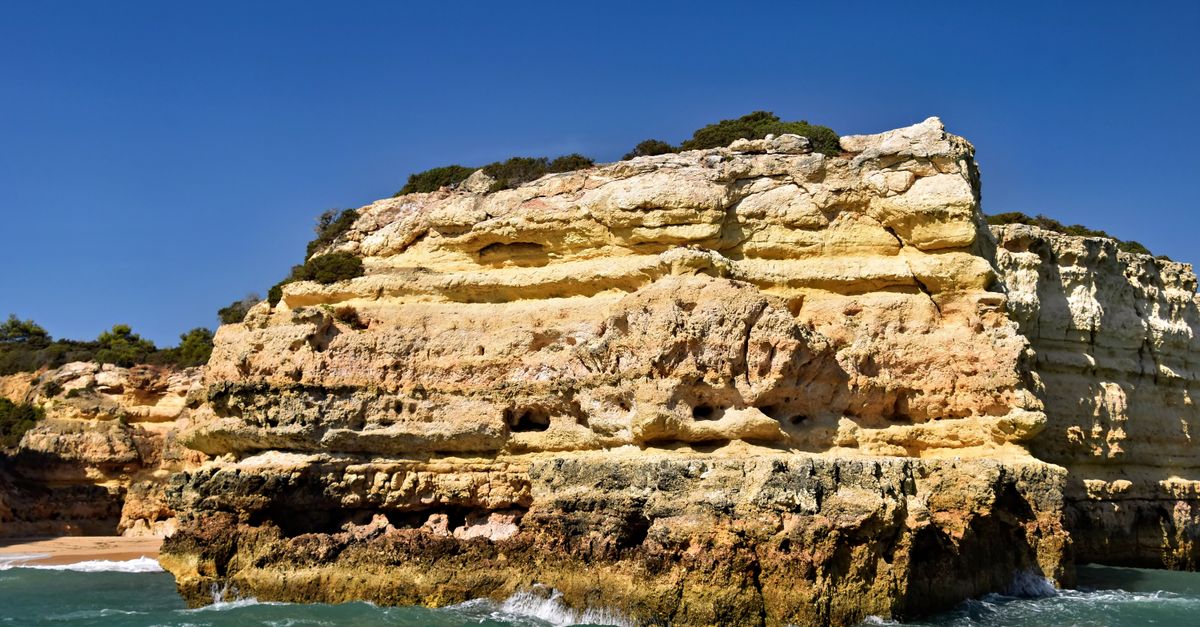
The Algarve is three coasts with different weather and crowds. Seven towns, who each one suits, the two we would skip, and why the west wins in August.
Tomás Reis · 2 Sep 2026Not going yet? Pin it.
One tap puts it on your map and in your pins, for when you are ready.