 Uncommon · +150 XP
Best time to visit: Apr–May · Sep–Nov
Daily spend ~$80
Uncommon · +150 XP
Best time to visit: Apr–May · Sep–Nov
Daily spend ~$80
Brazil
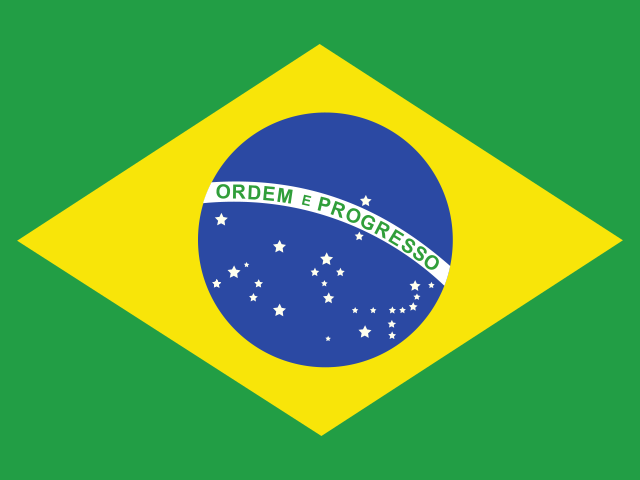
Bigger than the continental United States and it behaves like it. Beach culture in the south-east, the Amazon in the north, and music holding the middle together.
Brazil in ten slides
Wikipedia · 3 Sep 2026


Best time to visit Brazil: Apr–May · Sep–Nov
Where people go in Brazil
- Rio de Janeiro5 days is about right
- Salvador3 days is about right
- São Paulo3 days is about right
- Recife3 days is about right
- Belo Horizonte2 days is about right
- Curitiba2 days is about right
- Porto Alegre2 days is about right
- Brasília2 days is about right
- Campinas1 days is about right
- Fortaleza
What people go to see in Brazil

The Basilica of Our Lady of Lourdes, also known as the Basilica of Belo Horizonte, is a Catholic church built in a predominantly neo-Gothic style, which is located in Belo Horizonte, Brazil. Its construction was completed around 1923. The author of the project was Manoel Tunes, and the works were made by Antonio Gonçalves Gravatá.
Wikipedia · CC BY-SA 4.0 · 11 Jul 2026
Eugenio Hansen, OFS · CC BY-SA 4.0

The Niemeyer Building is a residential building located in Belo Horizonte, Brazil, designed by the architect Oscar Niemeyer and constructed between 1954 and 1960. It is an iconic piece of Brazilian modernistic architecture.
Wikipedia · CC BY-SA 4.0 · 17 Jul 2026
Gabriel Fernandes from São Paulo, Brasil · CC BY-SA 2.0


Praça Sete de Setembro, popularly known as Praça Sete, is a public square in the Centro of Belo Horizonte, Minas Gerais, Brazil. It is located at the intersection of Afonso Pena Avenue and Amazonas Avenue, two of the city’s principal thoroughfares, and is crossed by Rio de Janeiro Street and Carijós Street.
Wikipedia · CC BY-SA 4.0 · 9 Aug 2026
Adilmargs · CC BY-SA 4.0

Savassi is a neighborhood in Belo Horizonte, Brazil. It is located at the Central-South zone city district. Savassi is known for having a large number of bars, pubs, clubs, cafés, bistros, diners, restaurants, nightlife and shopping commerce.
Wikipedia · CC BY-SA 4.0 · 27 Jul 2025
Glaussius · CC BY-SA 3.0

The Cathedral of Brasília is the Roman Catholic cathedral serving Brasília, Brazil, and serves as the seat of the Archdiocese of Brasília. It was designed by Brazilian architect Oscar Niemeyer and engineered by Brazilian structural engineer Joaquim Cardozo, and was completed and dedicated on May 31, 1970.
Wikipedia · CC BY-SA 4.0 · 30 Jul 2026
Tissiana de A. de Souza · CC BY-SA 4.0

The Itamaraty Palace, also known as the Palace of the Arches, is the headquarters of the Ministry of Foreign Affairs of Brazil. It is located in the national capital of Brasília. The building was designed by architect Oscar Niemeyer and inaugurated on April 21, 1970.
Wikipedia · CC BY-SA 4.0 · 25 Aug 2026
Diego Baravelli · CC BY-SA 4.0

Juscelino Kubitschek Bridge, commonly called Ponte JK, is a steel and concrete arch bridge across Lake Paranoá in Brasília, Brazil. It connects the eastern shore of the lake – where Lago Sul, Paranoá and Brasília International Airport are located – to Brasília's city center, via the Monumental Axis. Opened to traffic on December 15, 2002, its distinctive silhouette quickly became a Brasília landmark.
Wikipedia · CC BY-SA 4.0 · 3 Jun 2026
Agência Brasília · CC BY 2.0

The National Congress is the legislative body of Brazil's federal government. Unlike the state legislative assemblies and municipal chambers, the Congress is bicameral, composed of the Federal Senate and the Chamber of Deputies. The Congress meets annually in Brasília from 2 February to 22 December, with a mid-term break taking place between 17 July and 1 August.
Wikipedia · CC BY-SA 4.0 · 4 Aug 2026
User:User0704 · Public domain

The Palácio da Alvorada is the official residence of the president of Brazil. It is located in the national capital of Brasília, on a peninsula at the margins of Paranoá Lake. The building was designed by Oscar Niemeyer and built between 1957 and 1958 in the modernist style.
Wikipedia · CC BY-SA 4.0 · 17 Jul 2026
Ministério da Cultura · CC BY 2.0

Praça dos Três Poderes or Three Powers Plaza is a plaza in Brasília, the capital of Brazil. The name is derived from the presence of the three branches of government around the plaza: the Executive, represented by the Palácio do Planalto ; the Legislative represented by the National Congress of Brazil; and the Judiciary, represented by the Supreme Federal Court.
Wikipedia · CC BY-SA 4.0 · 8 Jul 2026
Ivano Gutz · CC BY-SA 3.0

Cidade Baixa is a neighborhood of the city of Porto Alegre, the state capital of Rio Grande do Sul in Brazil. The neighborhood was created by the law number 2022 of December 7, 1959.
Wikipedia · CC BY-SA 4.0 · 21 Aug 2024
FrancoBras · CC BY-SA 3.0

Farroupilha Park, also known as Parque da Redenção, is a major urban park in the city of Porto Alegre, the state capital of Rio Grande do Sul, in Brazil.
Wikipedia · CC BY-SA 4.0 · 4 Jul 2026
Jefferson Bernardes/PMPA · Attribution

The Porto Alegre Public Market, in downtown Porto Alegre, Brazil, is the city's oldest public market. It is a historic landmark and a known meeting point, with many coffee shops and restaurants. There are about 109 shops in the market.
Wikipedia · CC BY-SA 4.0 · 17 Jul 2026
Tetraktys (Ricardo André Frantz) · CC BY-SA 3.0

The Archdiocese of Porto Alegre is a Latin Church metropolitan archdiocese of the Catholic Church in Rio Grande do Sul state, Brazil.
Wikipedia · CC BY-SA 4.0 · 15 Jun 2026
Paulo JC Nogueira · CC BY-SA 3.0

The Piratini Palace is the current seat of the Executive Branch of the Brazilian state of Rio Grande do Sul. It is located at Marechal Deodoro Square, also known as the Mother Church Square, in Porto Alegre's historic center. The Piratini Palace has been the official residence of thirty-eight governors.
Wikipedia · CC BY-SA 4.0 · 17 Mar 2026
Ricardo André Frantz (User:Tetraktys) · CC BY-SA 3.0

Usina do Gasômetro is a former electrical power station located in the Brazilian city of Porto Alegre, Rio Grande do Sul. Despite the name, it was a coal-powered plant, the name gasômetro being a reference to the plant location, in an area known as Volta do Gasômetro, which in turn had taken its name from a nearby factory: the Usina de Gás.
Wikipedia · CC BY-SA 4.0 · 26 Mar 2026
Heylenny · CC BY-SA 4.0

Christ the Redeemer is an Art Deco statue of Jesus in Rio de Janeiro, Brazil, created by French-Polish sculptor Paul Landowski and built by Brazilian engineer Heitor da Silva Costa, in collaboration with French engineer Albert Caquot and Romanian sculptor Gheorghe Leonida who sculpted the face.
Wikipedia · CC BY-SA 4.0 · 22 Aug 2026
Arne Müseler · CC BY-SA 3.0 de

Copacabana is a Brazilian bairro (neighbourhood) located in the South Zone of the city of Rio de Janeiro, Brazil. It is most prominently known for its 4 km (2.5 mile) balneario beach, which is one of the most famous in the world.
Wikipedia · CC BY-SA 4.0 · 12 Jun 2026
[www.flickr.com/photos/26912057@N02/ bisonlux] · CC BY 2.0

Ipanema is a neighbourhood located in the South Zone of the city of Rio de Janeiro, Brazil, between Leblon and Arpoador. The beach at Ipanema became known internationally with the popularity of the bossa nova song, "The Girl from Ipanema", written by Antônio Carlos Jobim and Vinícius de Moraes. It borders the neighborhoods of Copacabana, Leblon, and Lagoa.
Wikipedia · CC BY-SA 4.0 · 21 Jun 2026
Arne Müseler · CC BY-SA 3.0 de

Escadaria Selarón, locally known as the 'Lapa Steps' for being situated at the "Lapa" neighborhood, is a set of world-famous steps in Rio de Janeiro, Brazil. They are the work of Chilean-born artist Jorge Selarón who claimed it as "my tribute to the Brazilian people".
Wikipedia · CC BY-SA 4.0 · 1 Sep 2026
Marshallhenrie · CC BY-SA 4.0

Sugarloaf Mountain is a peak situated in Rio de Janeiro, Brazil, on a peninsula at the mouth of Guanabara Bay. Rising 396 m (1,299 ft) above the harbor, the peak is named for its resemblance to the traditional shape of concentrated refined sugarloaf. It is known worldwide for its cable car and panoramic views of the city and beyond.
Wikipedia · CC BY-SA 4.0 · 16 Aug 2026
Arne Müseler · CC BY-SA 3.0 de

Rio de Janeiro, also known simply as Rio, is the capital and largest city of the state of Rio de Janeiro. It is the second-largest city in Brazil after São Paulo, and the largest by international tourists. It has a population of 6 million in the city proper, and 13 million people in its metropolitan area as of 2025.
Wikipedia · CC BY-SA 4.0 · 31 Aug 2026
Rafael Rabello de Barros · CC BY-SA 3.0

The Barra Lighthouse also known as the Santo Antônio Lighthouse, is a lighthouse in Salvador, Bahia, Brazil. It is located at the tip of the Padrão, now the Point of Santo Antônio, to the extreme south of Salvador, at the entrance of the Bay of All Saints. The lighthouse was built at the center of the Santo Antônio da Barra Fort.
Wikipedia · CC BY-SA 4.0 · 15 Jun 2026
Priscila Nobrega Cecilio · CC BY-SA 4.0

The Church of Our Lord of Bonfim is the most famous of the Catholic churches of Salvador, in the State of Bahia, Brazil. It was built in the 18th century on the only line of hills in the Itapagipe Peninsula, in the lower town of Salvador. The church is the subject of intense religious devotion by the people of Salvador and is the site of a famous celebration held every year in January, the Festa do Senhor do Bonfim.
Wikipedia · CC BY-SA 4.0 · 2 Aug 2026
Paul R. Burley · CC BY-SA 4.0

The Lacerda Elevator (Elevador Lacerda) is a public urban elevator located in Salvador, Brazil, connecting the lower city (Cidade Baixa) to the upper city (Cidade Alta). The 72 metres (236 ft) elevator was built between 1869 and 1873; it was named after Antônio de Lacerda, director of the Commercial Association of Bahia. It was a hydraulic elevator at first; later operating by electricity since 1906.
Wikipedia · CC BY-SA 4.0 · 15 Jun 2026
Paul R. Burley · CC BY-SA 4.0

Salvador is a Brazilian municipality and capital city of the state of Bahia. Situated in the Zona da Mata in the Northeast Region of Brazil, Salvador is recognized throughout the country and internationally for its cuisine, music, and architecture. The African influence in many cultural aspects of the city makes it a center of Afro-Brazilian culture.
Wikipedia · CC BY-SA 4.0 · 2 Sep 2026
Fotos Gov/Ba · CC BY 2.0

The São Francisco Church and Convent is located in the Historic Center of Salvador, in the State of Bahia, Brazil. The ornate Church of the Third Order of Saint Francis sits adjacent to the convent. The friars of the Franciscan Order arrived in Salvador in 1587 and constructed a convent and church on the site.
Wikipedia · CC BY-SA 4.0 · 2 Aug 2026
Wellington Da Costa Gomez · CC BY-SA 4.0

Paulista Avenue is one of the most important avenues in São Paulo, Brazil. It stretches 2.8 kilometres (1.7 mi) and runs northwest to southeast.
Wikipedia · CC BY-SA 4.0 · 30 Jul 2026
Rodrigo Tetsuo Argenton · CC BY-SA 4.0

Ibirapuera Park is an urban park in São Paulo. It comprises 158 hectares between Av. República do Líbano, Av.
Wikipedia · CC BY-SA 4.0 · 20 May 2026
Fernando Stankuns · CC BY-SA 4.0

The São Paulo Museum of Art is an art museum in São Paulo, Brazil. It is well known for the architectural significance of its headquarters, a 1968 concrete and glass structure designed by Lina Bo Bardi. It is considered a landmark of the city and a symbol of modern Brazilian architecture, and one of the most-visited art museums in the world.
Wikipedia · CC BY-SA 4.0 · 28 Aug 2026
Mauro Cateb · CC BY-SA 2.0

The Municipal Market of São Paulo is a large public market in São Paulo, Brazil. It was designed by the architect Francisco Ramos de Azevedo and inaugurated on January 25, 1933 as a wholesale and retail post specializing in fruits, vegetables, cereals, meats, spices, and other food products. The market is located in the Mercado neighborhood, a name that references the market, in the historic center of São Paulo.
Wikipedia · CC BY-SA 4.0 · 21 Mar 2026
Webysther · CC BY-SA 4.0

The Pinacoteca de São Paulo is a visual arts museum focused on Brazilian art from the 19th century to the present day, in dialogue with various cultures from around the world. Founded in 1905 by the Government of the State of São Paulo, the Pinacoteca is the oldest art museum in the city and has three buildings: Pinacoteca Luz, Pinacoteca Estação and Pinacoteca Contemporânea.
Wikipedia · CC BY-SA 4.0 · 26 May 2026
Wilfredor · CC BY-SA 4.0


Bosque Alemão is a park built in Curitiba in honor of the German immigrants who began to settle in the city in the early 19th century.
Wikipedia · CC BY-SA 4.0 · 29 Oct 2025
Adelano Lázaro · Public domain
Zbigniew Henrique Morozowicz, known as Henrique de Curitiba, was a Brazilian composer of Polish descent. He chose the pseudonym "Henrique de Curitiba" to become known in Brazil and abroad under a more commonly and better pronounceable name.
Wikipedia · CC BY-SA 4.0 · 23 Mar 2026

Japan Square is a public space in the city of Curitiba, the capital of the Brazilian state of Paraná.
Wikipedia · CC BY-SA 4.0 · 24 May 2026
SamirNosteb · CC BY 3.0

The Oscar Niemeyer Museum is located in the city of Curitiba, in the state of Paraná, in Brazil. It was inaugurated in 2002 with the name Novo Museu or New Museum. With the conclusion of remodeling and the construction of a new annex, it was reinaugurated on July 8, 2003, with the current denomination to honor its famous architect Oscar Niemeyer, who completed this project at 95 years of age.
Wikipedia · CC BY-SA 4.0 · 15 Jun 2026
Mario Roberto Duran Ortiz · Public domain


Boa Viagem is a neighborhood in Recife, Pernambuco in the wealthy southern zone of the municipality. The neighborhood has one of the most visited beaches in Northeastern Brazil, Boa Viagem beach. The neighborhood has a population as of 2010 of 122,922 inhabitants, and an area of 753 hectares (2.91 sq mi).
Wikipedia · CC BY-SA 4.0 · 10 Jun 2026
Arne Müseler · CC BY-SA 3.0 de

The Campo das Princesas Palace is the administrative headquarters of Pernambuco's executive branch, located in Recife, Brazil. Designed in 1786 by Governor José César Meneses, it was built in 1841 by engineer Morais Âncora, at the behest of Governor Francisco do Rego Barros, where the Royal Treasury used to be.
Wikipedia · CC BY-SA 4.0 · 21 Mar 2026
governadoreduardocampos · CC BY-SA 2.0
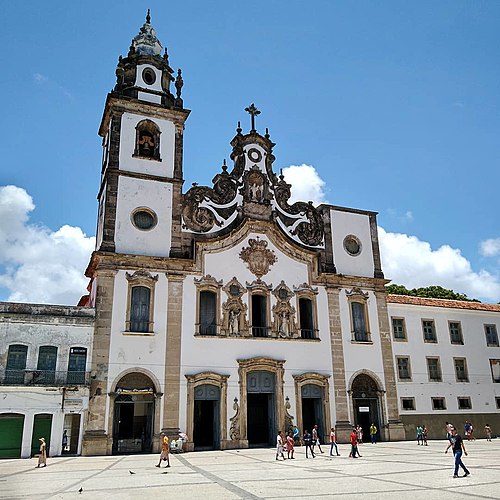
The Basilica and Convent of Nossa Senhora do Carmo, also called as Basilica of Recife, is a Catholic architectural complex, belonging to the Our Lady of Mount Carmel, that is in Recife, Pernambuco State, Brazil.
Wikipedia · CC BY-SA 4.0 · 11 Jul 2026
Marcelo Rabelo · CC BY-SA 4.0

The Museu do Estado de Pernambuco (MEPE) is housed in a 19th-century mansion on the Av. Rui Barbosa in Recife, capital of Pernambuco state, Brazil. It was opened in 1929.
Wikipedia · CC BY-SA 4.0 · 10 Jul 2026
Lais Castro · CC BY-SA 4.0


The Basilica of Our Lady of Carmel Also Basilica of Campinas Is a basilica located in the sector of Largo do Carmo, in the center of Campinas in the state of São Paulo in the south of Brazil. Originally it was the main church of the city and around which it developed Campinas.
Wikipedia · CC BY-SA 4.0 · 11 Jul 2026
Luiz Carlos Cappellano · Public domain

Antônio Carlos Gomes was a Brazilian composer notable for being the first New World composer whose work was accepted by Europe. He was the only non-European who was successful as an opera composer in Italy, during the "golden age of opera" contemporary to Verdi and Puccini, and the first composer of non-European lineage to be accepted into the classic tradition of music.
Wikipedia · CC BY-SA 4.0 · 12 Aug 2026
Unknown author · Public domain

The Instituto Agronômico de Campinas is a research and development institution affiliated to the Agência Paulista de Tecnologia dos Agronegócios, of the Secretary of Agriculture of the state of São Paulo, Brazil, with headquarters in the city of Campinas. It is the oldest institution of its kind in Latin America, having been founded by Emperor Dom Pedro II in 1887 as the Imperial Agronomical Station of Campinas.
Wikipedia · CC BY-SA 4.0 · 5 Jan 2026
enioprado · CC BY-SA 3.0
Sourced stays
Sourced experiences
Fly to Brazil
The facts you look up on the plane
Guides about Brazil
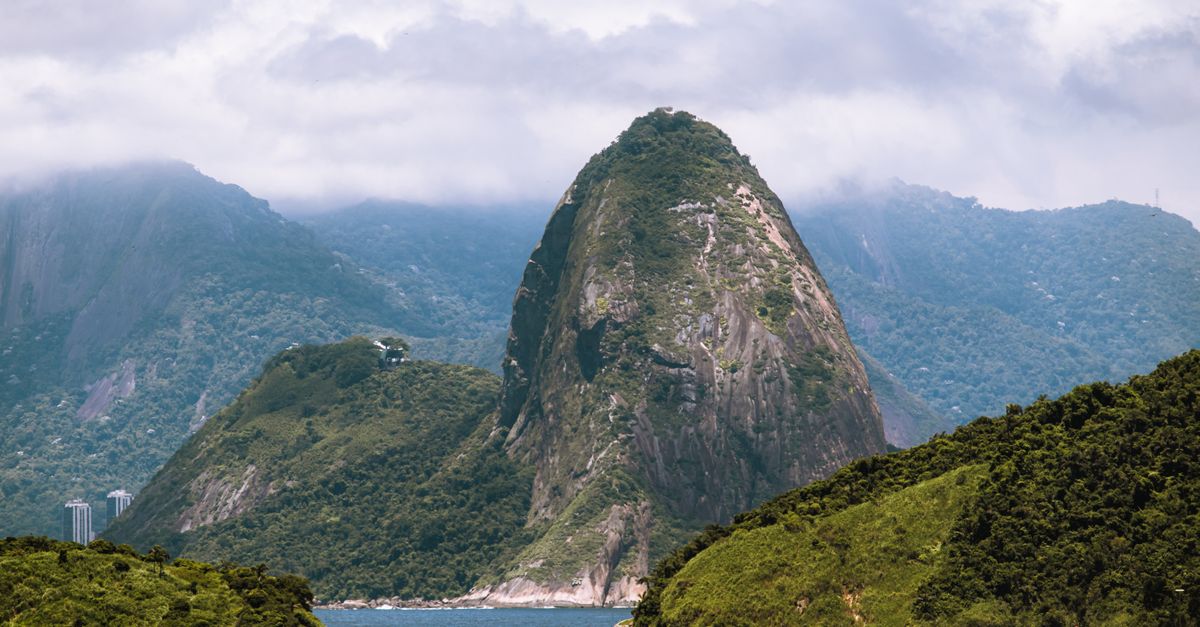
Not going yet? Pin it.
One tap puts it on your map and in your pins, for when you are ready.