 Common · +100 XP
Best time to visit: Jan–Feb · May–Jun · Sep
Daily spend ~$140
Common · +100 XP
Best time to visit: Jan–Feb · May–Jun · Sep
Daily spend ~$140
Austria
Alps down one side, imperial Vienna at the other end, and a train between them that costs almost nothing. Coffee houses are an institution with rules.
Austria in ten slides
Wikipedia · 3 Sep 2026


Best time to visit Austria: Jan–Feb · May–Jun · Sep
Where people go in Austria
What people go to see in Austria
Eggenberg Palace in Graz, is the most significant Baroque palace complex in the Austrian state of Styria. With its preserved accouterments, the extensive scenic gardens, as well as some special collections from the Universalmuseum Joanneum housed in the palace and surrounding park, Schloss Eggenberg ranks among the most valuable cultural treasures of Austria.
Wikipedia · CC BY-SA 4.0 · 28 Apr 2026

The Franciscan Church and Franciscan Monastery are a church and associated monastery in the centre of the city of Graz, Austria. The monastery was founded by the Franciscan order, who still own it, and is first mentioned in 1239.
Wikipedia · CC BY-SA 4.0 · 12 Jul 2026
DXPG · CC BY-SA 3.0

Graz Cathedral, also called St. Giles' Cathedral, is the Roman Catholic cathedral of the Diocese of Graz–Seckau in Graz, Austria. It is dedicated to Saint Giles (Ägidius), the patron saint of Graz, and serves as the seat of the bishop.
Wikipedia · CC BY-SA 4.0 · 12 Jul 2026
Taxiarchos228 · CC BY 3.0

The Kunsthaus Graz, Grazer Kunsthaus, or Graz Art Museum was built as part of the European Capital of Culture celebrations in 2003 and has since become an architectural landmark in Graz, Austria. Its exhibition program specializes in contemporary art from the 1960s onwards. The museum doesn't translate its name to English but uses its German name in all its English communications.
Wikipedia · CC BY-SA 4.0 · 1 Apr 2026
Marion Schneider & Christoph Aistleitner · CC BY-SA 2.5

The Murinsel in Graz, Austria, is an artificial floating "island" in the middle of the river Mur and links the two banks on both sides. At night, the blue navigation lights that surround the structure light up. This landmark of Graz was designed by New York City artist Vito Acconci on the occasion of Graz becoming the 2003 European Capital of Culture.
Wikipedia · CC BY-SA 4.0 · 14 May 2026
Unknown · Public domain

The Schlossberg is a tree-clad hill and the site of a fortress in the centre of the city of Graz, Austria. The hill, at 473 m (1,552 ft) above sea level, is now a public park and affords extensive views of the city. It is the site of several entertainment venues, cafés, and restaurants, and is managed by Holding Graz, the city-owned utility company.
Wikipedia · CC BY-SA 4.0 · 26 May 2026
C.Stadler/Bwag · CC BY-SA 4.0

The Styrian Armoury, in the Austrian city of Graz, is the world's largest historic armoury and attracts visitors from all over the world. It holds approximately 32,000 pieces of weaponry, tools, suits of armour for battle and ones for parades.
Wikipedia · CC BY-SA 4.0 · 11 Jul 2026
E.mil.mil (talk) · CC BY-SA 3.0 at

The Universalmuseum Joanneum is a multidisciplinary museum with buildings in several locations in the state of Styria, Austria. It has galleries and collections in many subject areas including archaeology, geology, paleontology, mineralogy, botany, zoology, history, art and folk culture.
Wikipedia · CC BY-SA 4.0 · 10 Jul 2026
Photo: Andreas Praefcke · CC BY 3.0
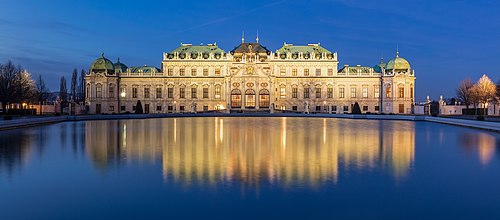
The Belvedere is a historic building complex and art museum in Vienna, Austria. The complex consists of two Baroque palaces, the Upper and Lower Belvedere, together with the Orangery, the Palace Stables, and a formal Baroque garden. It is located in the city's third district, Landstraße, on the south-eastern edge of Vienna's historic centre.
Wikipedia · CC BY-SA 4.0 · 19 Jun 2026
Diego Delso · CC BY-SA 4.0

The Hofburg is the former principal imperial palace of the Habsburg dynasty in Austria. Located in the center of Vienna, it was built in the 13th century by Ottokar II of Bohemia and expanded several times afterwards. It also served as the imperial winter residence, as Schönbrunn Palace was the summer residence.
Wikipedia · CC BY-SA 4.0 · 11 Aug 2026
C.Stadler/Bwag · CC BY-SA 3.0 at

The Kunsthistorisches Museum Wien is an art museum in Vienna, Austria. Housed in its festive palatial building on the Vienna Ring Road, it is crowned with an octagonal dome. The term Kunsthistorisches Museum applies to both the institution and the main building.
Wikipedia · CC BY-SA 4.0 · 26 Aug 2026

The Naschmarkt is a popular fruit and vegetable market in Vienna. Located at the Wienzeile over the Wien River, it is about 1.5 kilometres (0.93 mi) long. Originally known as Aschenmarkt, it started to be called the Naschmarkt around 1820.
Wikipedia · CC BY-SA 4.0 · 14 Jun 2026
C.Stadler/Bwag · CC BY-SA 4.0


Schönbrunn Palace was the main summer residence of the Habsburg rulers, located in Hietzing, the 13th district of Vienna. The name Schönbrunn has its roots in an artesian well from which water was consumed by the court.
Wikipedia · CC BY-SA 4.0 · 24 Jul 2026
C.Stadler/Bwag · CC BY-SA 4.0

The Secession Building is a contemporary art exhibition hall in Vienna, Austria. It was completed in 1898 by Joseph Maria Olbrich as an architectural manifesto for the Vienna Secession, a group of rebel artists that seceded from the long-established fine art institution.
Wikipedia · CC BY-SA 4.0 · 21 Mar 2026
Thomas Ledl · CC BY-SA 4.0

St. Stephen's Cathedral is a Roman Catholic church in Vienna, Austria, and the mother church of the Archdiocese of Vienna. It is the seat of the Archbishop of Vienna, Josef Grünwidl.
Wikipedia · CC BY-SA 4.0 · 16 Aug 2026
C.Stadler/Bwag · CC BY-SA 4.0

Getreidegasse is a busy shopping street in the historic Altstadt of Salzburg, Austria, a UNESCO World Heritage Site since 1996. It is known for the birthplace of Wolfgang Amadeus Mozart at No. 9, where he lived until the age of 17. The narrow street is characterised by numerous high townhouses side by side with its wrought iron guild signs.
Wikipedia · CC BY-SA 4.0 · 18 Dec 2025
Snotty · CC BY-SA 3.0

Hellbrunn Palace is an early Baroque villa of palatial size, located in Hellbrunn, the southern countryside district (Landschaftsraum) of the city of Salzburg, Austria. It was built in 1613–19 by Markus Sittikus von Hohenems, Prince-Archbishop of Salzburg, and named for the "clear spring" that supplied it.
Wikipedia · CC BY-SA 4.0 · 19 Mar 2026
Nicholas Even (own work) · CC BY 2.5

Hohensalzburg Fortress is a large medieval fortress in the city of Salzburg, Austria. It sits atop the Festungsberg mountain at an altitude of 506 m. It was erected at the behest of the prince-archbishops of Salzburg.
Wikipedia · CC BY-SA 4.0 · 22 Mar 2026
C.Stadler/Bwag · CC BY-SA 4.0

Mirabell Palace is a historic building in the city of Salzburg, Austria. The palace with its gardens is a listed cultural heritage monument and part of the Historic Centre of the City of Salzburg UNESCO World Heritage Site.
Wikipedia · CC BY-SA 4.0 · 13 Feb 2026
Cezar Suceveanu · CC BY-SA 3.0

The Mönchsberg, at 508 metres (1,667 ft) above sea level, is one of five mountains in the city of Salzburg in Austria. It flanks the western side of Salzburg's historic city centre, and forms part of the city's UNESCO World Heritage Site.
Wikipedia · CC BY-SA 4.0 · 2 Dec 2025
MatthiasKabel · CC BY-SA 3.0

Mozart's birthplace is a house museum in Austria at No. 9 Getreidegasse in Salzburg, Austria. The Mozart family resided on the third floor from 1747 to 1773, and Mozart was born in the residence on 27 January 1756. He was the seventh child of Leopold Mozart, who was a musician with the Salzburg Royal Chamber.
Wikipedia · CC BY-SA 4.0 · 23 Jul 2026
Andreas Stiasny · CC BY-SA 3.0 at

Salzburg Cathedral is the seventeenth-century Baroque cathedral of the Roman Catholic Archdiocese of Salzburg in the city of Salzburg, Austria, dedicated to Saint Rupert and Saint Vergilius. Saint Vergilius founded the church in 774 on the remnants of a Roman town, and the cathedral was rebuilt in 1181 after a fire.
Wikipedia · CC BY-SA 4.0 · 12 Jul 2026
Bede735c · CC BY-SA 3.0

The Brucknerhaus is a festival and congress centre in Linz, Austria named after the Austrian composer Anton Bruckner. The building was designed by Finnish architects Heikki and Kaija Siren. Its construction took place from 1969 to 1973.
Wikipedia · CC BY-SA 4.0 · 30 Aug 2026
No machine-readable author provided. Koenjo~commonswiki assumed (based on copyright claims). · CC BY-SA 3.0


Linz Castle (Linzer Schloss) is located on a hill above the old town district of Linz, Austria, directly on the Danube.
Wikipedia · CC BY-SA 4.0 · 7 Aug 2025
User:NeoUrfahraner · CC BY-SA 3.0

The New Cathedral, also known as the Cathedral of the Immaculate Conception, is a Roman Catholic cathedral located in Linz, Austria. The neo-Gothic church is the largest church building in Austria.
Wikipedia · CC BY-SA 4.0 · 26 Jul 2026
Pierre Bona · CC BY-SA 3.0

The Pöstlingberg is a 539-metre (1,768 ft) high hill on the left bank of the Danube in the city of Linz, Austria. It is a popular tourist destination, with a viewing platform over the city, and is the site of the Pöstlingberg pilgrimage church, and the Linz Grottenbahn.
Wikipedia · CC BY-SA 4.0 · 1 Jul 2026
NeoUrfahraner · CC BY-SA 3.0

The Pöstlingbergbahn is a narrow-gauge electric railway, or "mountain tramway", in Linz, Austria. It connects the main square in the centre of Linz with the district of Pöstlingberg, located at the top of a hill at the northern end of the city.
Wikipedia · CC BY-SA 4.0 · 22 Feb 2026
Liberaler Humanist · CC BY-SA 3.0
Sourced stays
Sourced experiences
Fly to Austria
The facts you look up on the plane
Guides about Austria
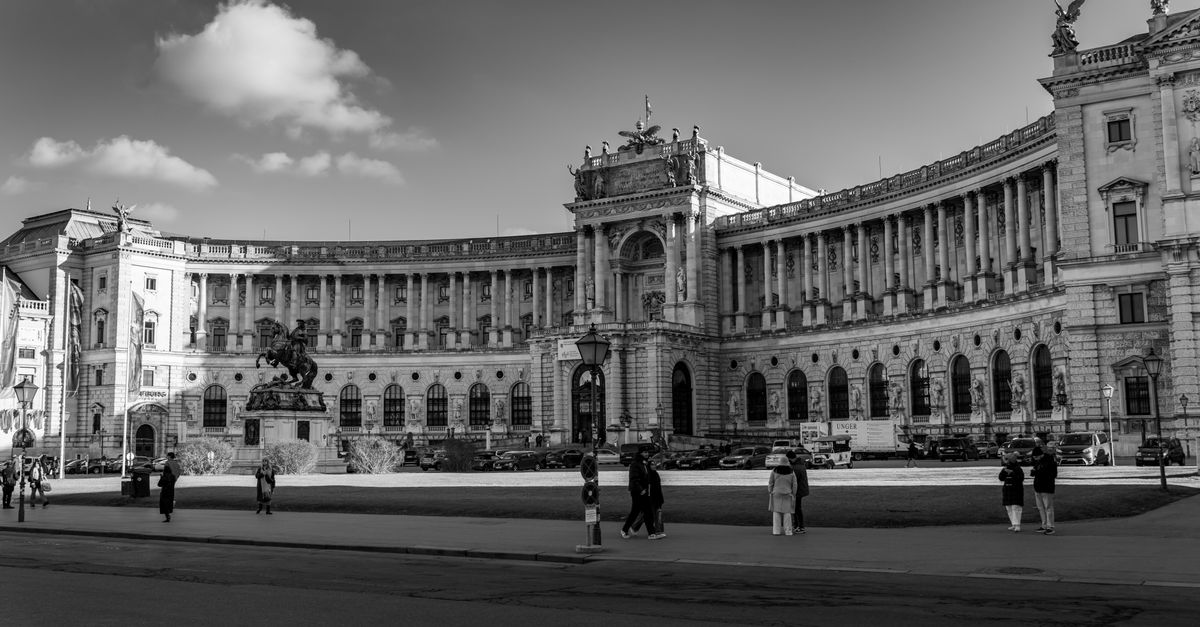
Vienna rewards sitting down, so a route that sprints between palaces misses it. Two days, the concert to avoid, and which Habsburg palace to skip.
Josefin Bakke · 2 Sep 2026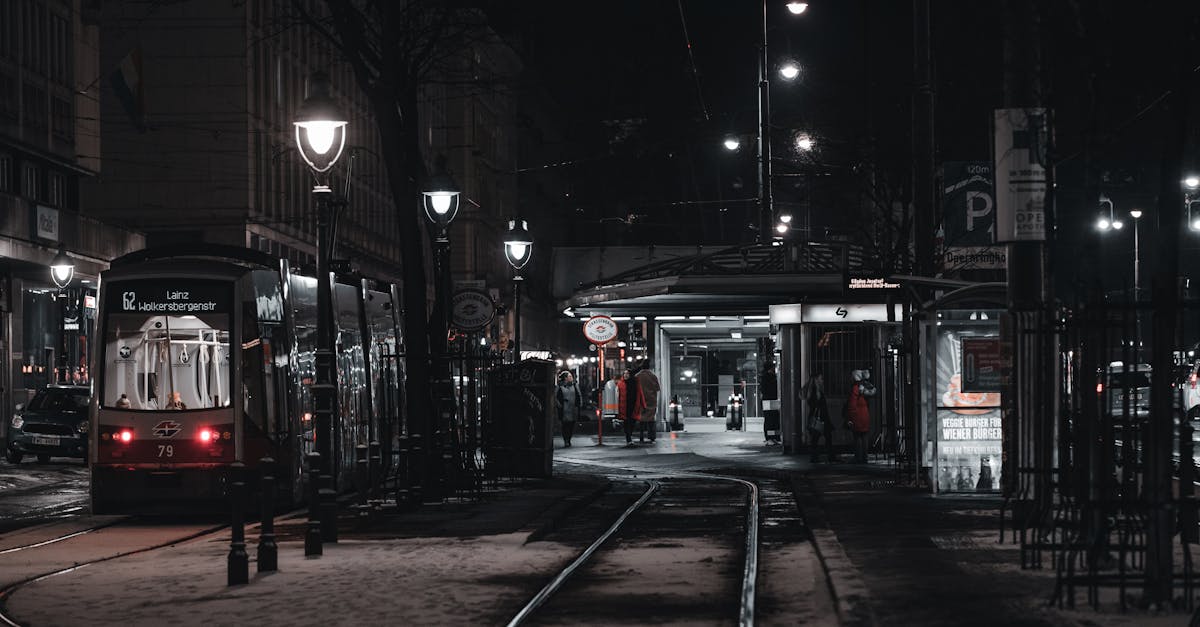
Vienna's accommodation tax went to 5% in July 2026 and is scheduled to reach 8% in 2027. The districts, the Ring that organises them, and where the value is.
Josefin Bakke · 2 Sep 2026Not going yet? Pin it.
One tap puts it on your map and in your pins, for when you are ready.