København
Flat, cycled and expensive, with a design sense that starts at the chairs and works outwards. You will not get a table at Noma and will eat brilliantly anyway.
København in eight slides
Wikipedia · 3 Sep 2026


Things to do in København
Where to stay in København
København in a day, two days, three
Landmarks in København

Amalienborg is the official residence for the Danish royal family and is located in Copenhagen. Frederick VIII's palace complex has four identical Classical façades, effectively four palaces, with Rococo interiors, laid around an octagonal courtyard. At the centre is a large equestrian statue of Frederick V.
Wikipedia · CC BY-SA 4.0 · 16 Jul 2026
Rob Deutscher from Melbourne, Australia · CC BY 2.0
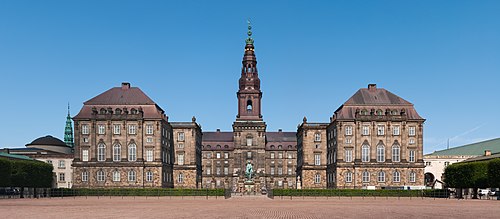
Christiansborg Palace is a palace and government building on the islet of Slotsholmen in central Copenhagen, Denmark. It is the seat of the Danish Parliament, the Danish Prime Minister's Office, and the Supreme Court of Denmark. Also, several parts of the palace are used by the Danish monarch, including the Royal Reception Rooms, the Palace Chapel and the Royal Stables.
Wikipedia · CC BY-SA 4.0 · 9 May 2026
Julian Herzog (Website) · CC BY 4.0

Freetown Christiania, also known as Christiania or simply Staden, is an intentional community, anarchist commune, micronation and former army barracks in the Christianshavn neighbourhood of the Danish capital city of Copenhagen. It began in 1971 as a squatted military base.
Wikipedia · CC BY-SA 4.0 · 21 Aug 2026
Franklin Heijnen · CC BY-SA 2.0

Nyhavn is a 17th-century waterfront, canal and entertainment district in Copenhagen, Denmark. Stretching from Kongens Nytorv to the Inner Harbour just south of the Royal Playhouse, it is lined by brightly coloured 17th and early 18th century townhouses and bars, cafes and restaurants. The canal harbours many historical wooden ships.
Wikipedia · CC BY-SA 4.0 · 17 Jun 2026
European Commission · CC BY 4.0

Rosenborg Castle is a renaissance castle in Copenhagen, Denmark. The castle was originally built as a country summerhouse in 1606 and is an example of Christian IV's many architectural projects. It was built in the Dutch Renaissance style, typical of Danish buildings during this period, and has been expanded several times, finally evolving into its present condition by the year 1624.
Wikipedia · CC BY-SA 4.0 · 17 Jul 2026
Elgaard · CC BY-SA 3.0
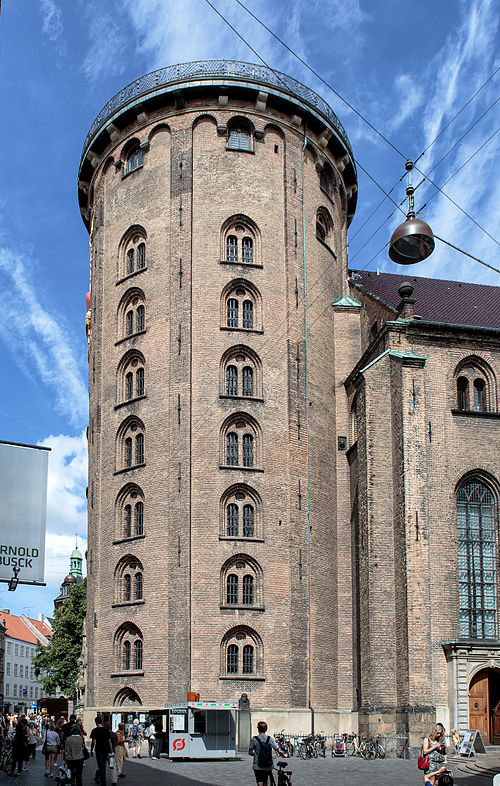
The Round Tower is a 17th-century tower in Copenhagen, Denmark, one of the many architectural projects of Christian IV. Built as an astronomical observatory, it is noted for its equestrian staircase, a 7.5-turn helical corridor leading to the platform at the top, and its views over Copenhagen.
Wikipedia · CC BY-SA 4.0 · 21 Jul 2026
Avda · CC BY-SA 3.0

The Little Mermaid is a bronze statue by Edvard Eriksen, depicting a mermaid becoming human. The sculpture is displayed on a rock by the waterside at the Langelinie promenade in Copenhagen, Denmark. It is 1.25 metres (4.1 ft) tall and weighs 175 kilograms (385 lb).
Wikipedia · CC BY-SA 4.0 · 2 Jul 2026
Avda-berlin · CC-BY-SA-3.0

Tivoli Gardens, also known simply as Tivoli, is an amusement park and pleasure garden in Copenhagen, Denmark. The park opened on 15 August 1843 and is the second-oldest operating amusement park in the world, after Dyrehavsbakken in nearby Klampenborg, also in Denmark.
Wikipedia · CC BY-SA 4.0 · 31 Aug 2026
European Commission · CC BY 4.0
Amalienborg is the official residence for the Danish royal family and is located in Copenhagen. Frederick VIII's palace complex has four identical Classical façades, effectively four palaces, with Rococo interiors, laid around an octagonal courtyard. At the centre is a large equestrian statue of Frederick V.
Wikipedia · CC BY-SA 4.0 · 16 Jul 2026
Rob Deutscher from Melbourne, Australia · CC BY 2.0
Christiansborg Palace is a palace and government building on the islet of Slotsholmen in central Copenhagen, Denmark. It is the seat of the Danish Parliament, the Danish Prime Minister's Office, and the Supreme Court of Denmark. Also, several parts of the palace are used by the Danish monarch, including the Royal Reception Rooms, the Palace Chapel and the Royal Stables.
Wikipedia · CC BY-SA 4.0 · 9 May 2026
Julian Herzog (Website) · CC BY 4.0
Freetown Christiania, also known as Christiania or simply Staden, is an intentional community, anarchist commune, micronation and former army barracks in the Christianshavn neighbourhood of the Danish capital city of Copenhagen. It began in 1971 as a squatted military base.
Wikipedia · CC BY-SA 4.0 · 21 Aug 2026
Franklin Heijnen · CC BY-SA 2.0
Nyhavn is a 17th-century waterfront, canal and entertainment district in Copenhagen, Denmark. Stretching from Kongens Nytorv to the Inner Harbour just south of the Royal Playhouse, it is lined by brightly coloured 17th and early 18th century townhouses and bars, cafes and restaurants. The canal harbours many historical wooden ships.
Wikipedia · CC BY-SA 4.0 · 17 Jun 2026
European Commission · CC BY 4.0
Rosenborg Castle is a renaissance castle in Copenhagen, Denmark. The castle was originally built as a country summerhouse in 1606 and is an example of Christian IV's many architectural projects. It was built in the Dutch Renaissance style, typical of Danish buildings during this period, and has been expanded several times, finally evolving into its present condition by the year 1624.
Wikipedia · CC BY-SA 4.0 · 17 Jul 2026
Elgaard · CC BY-SA 3.0
The Round Tower is a 17th-century tower in Copenhagen, Denmark, one of the many architectural projects of Christian IV. Built as an astronomical observatory, it is noted for its equestrian staircase, a 7.5-turn helical corridor leading to the platform at the top, and its views over Copenhagen.
Wikipedia · CC BY-SA 4.0 · 21 Jul 2026
Avda · CC BY-SA 3.0