Three days in Bangkok, and the 20 baht fare you will not be getting
Three days in Bangkok routed around the river and the rail lines, plus the 20 baht flat fare that applies to Thai nationals only, and what you pay instead.
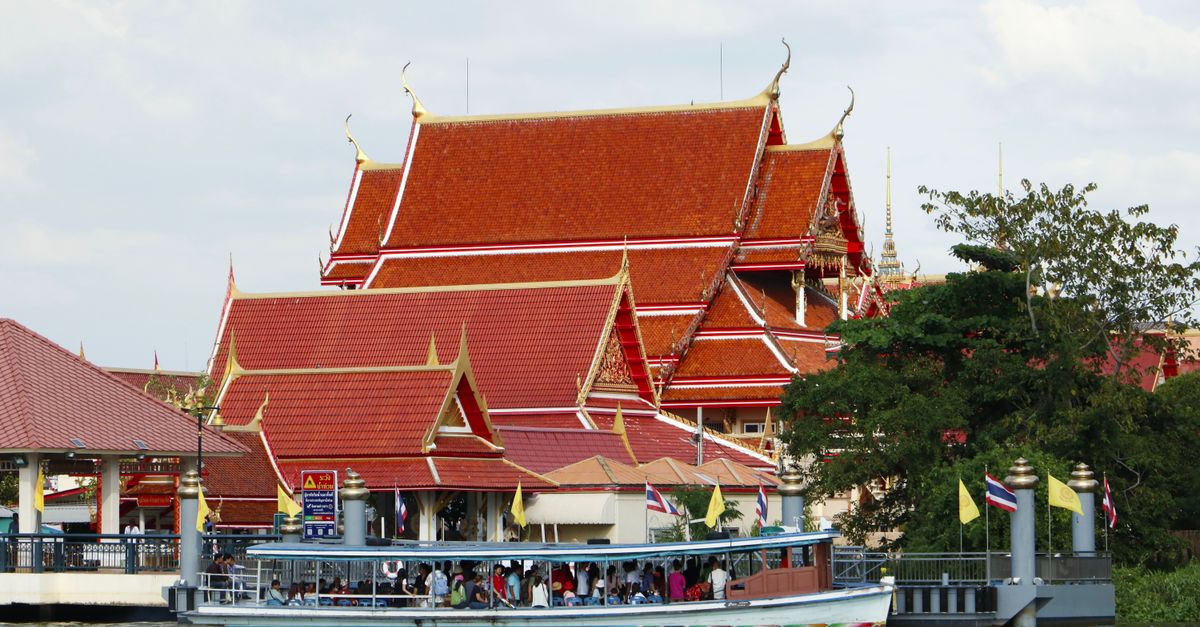
Photo · AmNOT 404 · Pexels
Three days in Bangkok is one day on the river, one on the rail lines, one on a market and a day trip. Organise it that way and the city is manageable. Organise it by sight and you will spend the trip in traffic.
Before that, one correction, because it has been widely misreported in English: the 20 baht flat train fare is not for you.
Thai baht. Convert any figure on this page into your own currency at today's published rate.
Open the currency converter →The fare cap, and who actually gets it
From 1 October 2025, Thailand capped fares on Bangkok's electric rail network at 20 baht per trip regardless of distance, across 13 lines, 194 stations and nearly 280 kilometres, including the Green, Blue, Purple, Yellow, Pink, Gold, Red and Airport Rail Link lines.
It applies exclusively to Thai nationals. To use it you need a 13-digit Thai national ID card, a registered travel card and the government app. Foreign visitors and foreign residents pay the ordinary distance-based fares.
This is worth stating plainly because a number of English-language travel pages have reported the cap as a flat fare for everyone, and a traveller who has read those will be budgeting Bangkok transport at roughly a third of what they will actually pay.
What you will use instead:
- A Rabbit card for the BTS Skytrain, topped up at any station.
- The MRT, which uses its own tokens or card.
- The Chao Phraya express boats, which are cheap, frequent and the best
sightseeing in the city.
The Skytrain operator publishes the current fare table, and the fares you will pay are the distance-based ones on it.
By late 2026 the system is due to accept QR payments through the app on all lines, which may eventually simplify this for visitors. It does not yet.
Day 1: the river and the old town
Start early. The old town has no shade and by eleven it is punishing.
Morning: the Grand Palace and Wat Phra Kaew. Get there at opening. The dress code is enforced at the gate: shoulders and knees covered, nothing see-through. There are rental stalls outside because of how many people arrive not knowing, and the queue for those is its own event.
Late morning: Wat Pho, five minutes' walk, for the reclining Buddha and the traditional massage school, which is the best massage in Bangkok and is at the place that trains the masseurs.
Midday: the cross-river ferry to Wat Arun, which costs a few baht and takes three minutes. Wat Arun is better at close range than in the postcard, because the porcelain the spires are decorated with is broken Chinese ceramics.
Afternoon: an orange-flag express boat up or down the river. This is the part that will surprise you: it is a commuter service, it costs almost nothing, and it passes everything the tourist cruises charge for.
Evening: Talat Noi and the old Chinatown edge, or Yaowarat, which is Chinatown proper and is a street-food event every night from about six.
Day 2: the rail lines and the modern city
Morning: Jim Thompson House. A cluster of teak houses assembled by an American who revived the Thai silk industry and then vanished in Malaysia in
- Timed guided entry, and it takes an hour.
Late morning: the BTS out to a neighbourhood. Ari for coffee and small restaurants, or Ekkamai and Thong Lor for the modern eating streets.
Afternoon, pick one:
- Lumphini Park in the late afternoon, when Bangkok exercises and the monitor
lizards come out, which is not a figure of speech.
- The Bangkok Art and Culture Centre at National Stadium, free, air
conditioned, and genuinely good.
- Chatuchak, if it is a Saturday or Sunday, and see day 3.
Evening: a rooftop, or Yaowarat again. Bangkok's rooftop bars have dress codes and prices that are a long way from the street below, and the view is genuinely spectacular. One is enough.
Day 3: a market, and out
If it is a weekend: Chatuchak. Fifteen thousand stalls, Saturday and Sunday only, and one of the great markets on earth. Go at nine, take the MRT to Kamphaeng Phet rather than the BTS to Mo Chit, and come out of exit 2 into the middle of it rather than at the edge.
If it is a weekday, pick one day trip:
- Ayutthaya, the former capital, 80 minutes north by train, with ruined
temples spread across an island in the river. Hire a bicycle at the station.
- The railway market at Maeklong and the floating market at
Damnoen Saduak, which are usually sold as a pair and are a long half day. The railway market, where the stalls fold away as the train passes through them, is the better half.
- Bang Krachao, the "green lung", which is a loop in the river forty minutes
from the centre that is almost entirely undeveloped, reached by a small boat and best on a hired bicycle.
Our call: Ayutthaya if you want history, Bang Krachao if you want to understand why people live here.
Visa-free · 60 days, on all five passports we check.
Short tourist stays only. Checked 21 Aug 2026; rules change without notice and the government page is the source of truth.
Check your own passport →Checked 21 Aug 2026.
Everything we check for Thailand →The two airports
Check which one you are leaving from. Suvarnabhumi takes most full-service international flights, Don Mueang takes most budget carriers, they are on opposite sides of the city, and they are about an hour and a half apart in traffic.
Give an early departure a night near the right airport, or at minimum give the transfer twice as long as the map suggests. This is the most common way a Thailand trip ends badly.
What to skip
A tuk-tuk for anything the BTS reaches. Slower, hotter, dearer, and the ones waiting outside temples are running a fixed price.
Anyone outside a temple telling you it is closed today. It is not. This is a long-running scam that ends at a gem shop.
Khao San Road, unless you want it. It is a specific thing and it is not Bangkok, and it is a long way from the rail lines.
Two nights in Bangkok before flying south. The city is worth three and the old town alone is a full day.
A car or a taxi across town at 5pm. The Skytrain is above the traffic for a reason.
Budgeting Bangkok transport at 20 baht a trip. The whole first section.
Before you book
Where to stay in Bangkok is the neighbourhood breakdown, and the short version is that being on the BTS or MRT matters more than the postcode. Two weeks in Thailand puts Bangkok into the full route, including the monsoon split that decides which coast you finish on, and three days in Chiang Mai is the northern half. The best islands in Thailand ranks the beaches and Bali or Thailand is the comparison worth reading first. Where to stay in Singapore covers the stopover many of these flights make.
The Bangkok city guide and the Thailand country guide carry the practicalities, and there is more in the itineraries hub. When you are ready, Bangkok rooms are here and the bookable half is here.
Fares and rules checked September 2026. The flat-fare scheme's eligibility and the promised QR payment rollout are both live policy questions, so Thailand's tourism authority and the operators' own pages are better sources for your dates than any guide, this one included. Here is how we research and re-check guides.


